Nobody wants to die trying to look cool for an instagram post… Yet some people do. I’d rather not be one of them. I think it’s important to know what actually motivates me, deep down, and whether it’s something I want to nurture or to restrain.
What is adventure
I had an epiphany a few years ago while reading Terray’s Conquerors of the Useless. I realized that adventure does not need external objectives: filling in a blank spot in a map, personal profit, not even a more abstract “humanistic” goal like pushing the limits of human possibility. Even personal growth or self-discovery aren’t essential to it. I don’t need to be an influencer or a world-class athlete to just pack my gear and go out there. What defines adventure is not how extreme the undertaking is, or what it accomplishes; it is the mismatch between the adventurer and the objective. It’s an adventure if you don’t know whether you’ll succeed. My adventure stories reflect that; half of them get cut short when I realize I’m biting more than I can chew.
Why go?
I’m not one of those people who boast of having “type 2 fun” (suffering during, fun in retrospect). I enjoy the moment. Everything else vanishes and what’s left is something like animal life: staying warm, managing my energy, avoiding injuries, finding water, eating, finding shelter. The hard times make the good ones sharper. Each problem is a set-up for a satisfying solution. With each trip I train, I prepare, I anticipate. When the trip actually takes place, an irreducible gap always emerges between prediction and reality, but the work beforehand helps to bridge it, along with a bit of luck.
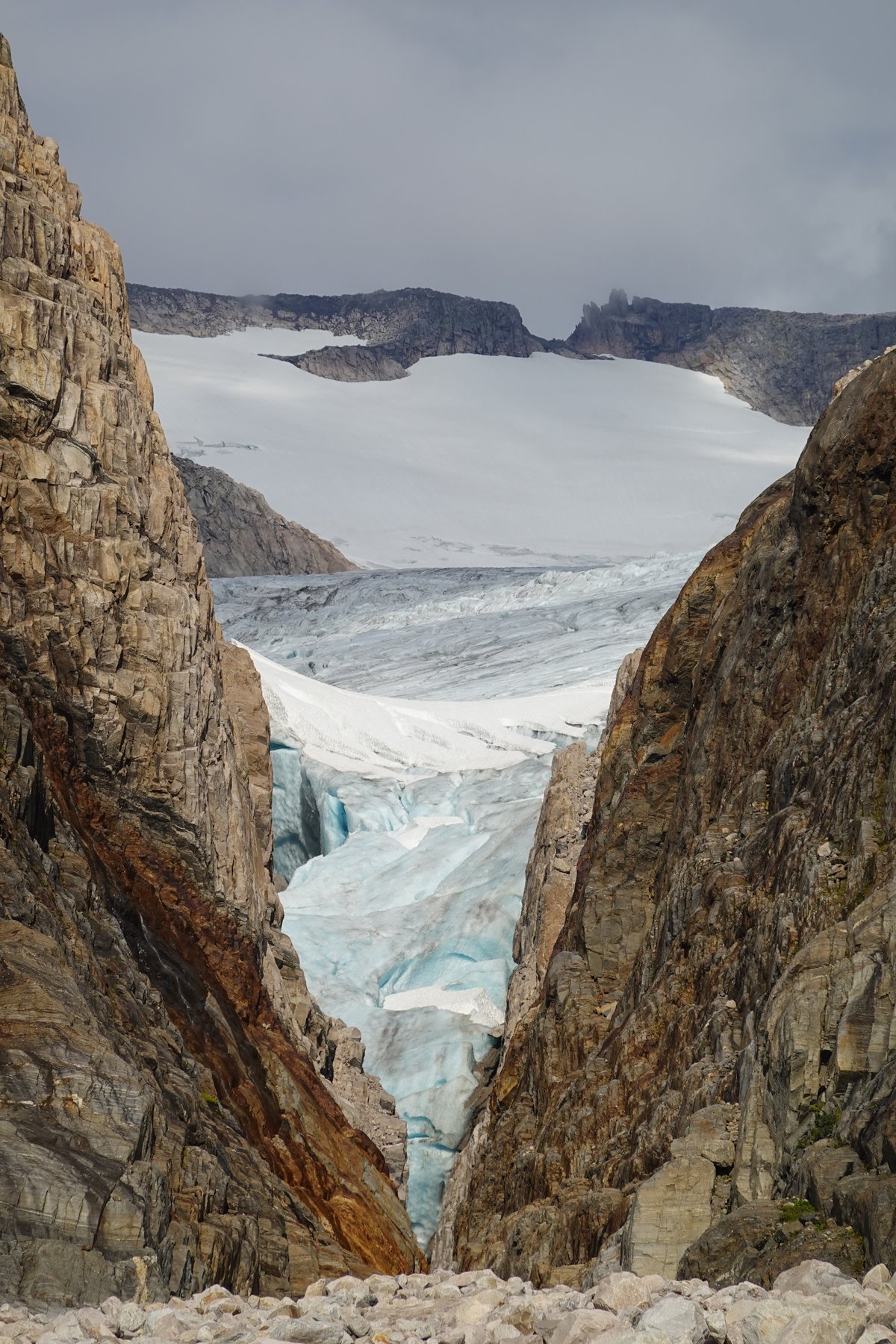
Besides these personal satisfactions, there’s the sublime. I share my pictures on this website, but much like art and music appreciation require educating the eye and the ear, so does appreciation of landscapes, and forest sounds, and the feeling of wet gravel under the foot. You don’t look at a landscape the same way when you know you’re going to cross it footstep by footstep, fighting through the bushes and up the slopes. You don’t hear the same night-time rainforest when you’re stuck there in the dark in a hammock, a thin layer of polyester the only thing shielding you from whatever made that odd noise right by your left ear.
Being integrated in the natural world transforms the perception of it, and not only practically. A richer, more intense aesthetic experience follows from the engagement, not in spite of it.
The beauty and the challenge generate a poetic, epic narrative. We are storytelling animals: our sense of self is a character, and we get to write its story. An adventurer tells a story of themselves as a romantic hero, on a quest into the unknown, tested by the world, to return defeated or victorious. The practices of alpinism and remote expeditions produce a narrative of oneself that is beautiful and flattering, on the model of the hero’s journey.
Ego
That narrative work is intimate and personal. But it can also be a social facade, a cry for recognition and validation. It’s nice to say “I climbed this mountain, it was so hard”, and have people respond with “You’re so brave, I could never” (privately they think: “But why would I want to, anyway? Weirdo…”). I see this a lot in alpinists… They climb up mountains so they can look down on the valley people. I catch myself thinking that way, sometimes. It’s an ugly way of thinking, given that alpinism and “expeditions” are selfish endeavors, at best; at worst they are destructive. I fly around the world to stare at melting glaciers. Others die in the wild, and those who loved them weep.
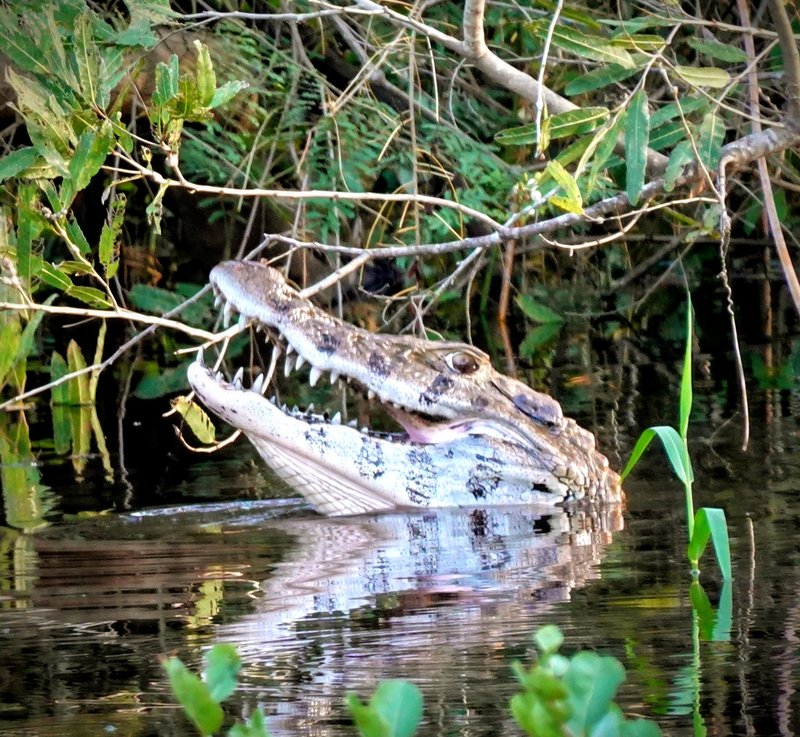
Sometimes I wonder, also, whether this is all a form of escapism. The success of an expedition is all mine: the planning, the logistics, the training, the physical effort, the adaptation and the courage, all leading to the outcome. Political action, for instance, does not work that way. You do the work, and you often cannot tell if anything changed at all, if your contribution mattered. Scientific research is often the same. Love sometimes fizzles out, despite our best efforts. Much of modern office labor takes place in vast economic networks with countless positive and negative externalities: did I make the world a better place? In those endeavours effort and outcome are poorly correlated. Adventures are simple: veni, vidi, optionally vici. Perhaps rafting in caiman-infested waters is just my safe space?
Moving forward
Adventures don’t make you a better person; the world does not need adventures or self-described adventurers. Much of it is ego-stroking. Useless, at best. Sometimes with climatic consequences. And why am I making this website? I intend to share a part of my life with my friends and family, and some strangers. Pretty pictures, stories that help define me, perhaps some inspiration for others. But there’s also vanity in it.
Yet having projects that genuinely constitute who you are is a virtue. The joy and the beauty are real. The narrative of self that these trips produce has given me something I haven’t been able to find elsewhere. These aren’t trivial goods: a life cleared of them, in order to be more available for other purposes, isn’t obviously a better life. And my life need not be fully dedicated to this hobby.
I’ll keep coming back to these reflections and changing this note, for as long as I go on adventures.
Further reading
Foundational: Terray’s Conquerors of the Useless is where this started. The title is the argument. It’s also the best mountaineering book ever written. Simmel’s “The Adventure” is a focused philosophical account of what adventure actually is.
On morality: Mill’s Utilitarianism proposes to judge the morality actions based on the sum of their consequences (their usefulness); MacIntyre’s After Virtue proposes virtue ethics as an alternative that is not limited to a calculus of welfare.
On perception and aesthetics: Kant’s Critique of Judgment is the classical account of the sublime, and implicitly the position this piece argues against. Merleau-Ponty’s Phenomenology of Perception and Gibson’s Ecological Approach to Visual Perception address how being inside a landscape transforms perception of it. Rebuffat’s Étoiles et Tempête illustrates this from the perspective of an alpinist. Dewey’s Art as Experience apparently bridges the gap between engagement and aesthetic experience (I’m told it belongs here, but haven’t read it yet).
Narrative self-construction: MacIntyre is also relevant here, though the canonical account is Ricoeur’s Oneself as Another, which I have yet to read. Dennett’s Consciousness Explained explores the theme intelligently from a cognitive science angle. Nietzsche’s Ecce Homo (“How One Becomes What One Is”) is an amusing illustration of the practice… and its egotist pitfalls. So is Messner’s entire body of work.
Community: Of course this reflection is a personal one: things I asked myself before going on adventures where risk was important, or when taking other people with me, or when making this website. But it’s also the product of discussions with many people who have much more experience than me and who have thought about it for decades, whether they’re mountain guides or more experienced amateurs.